
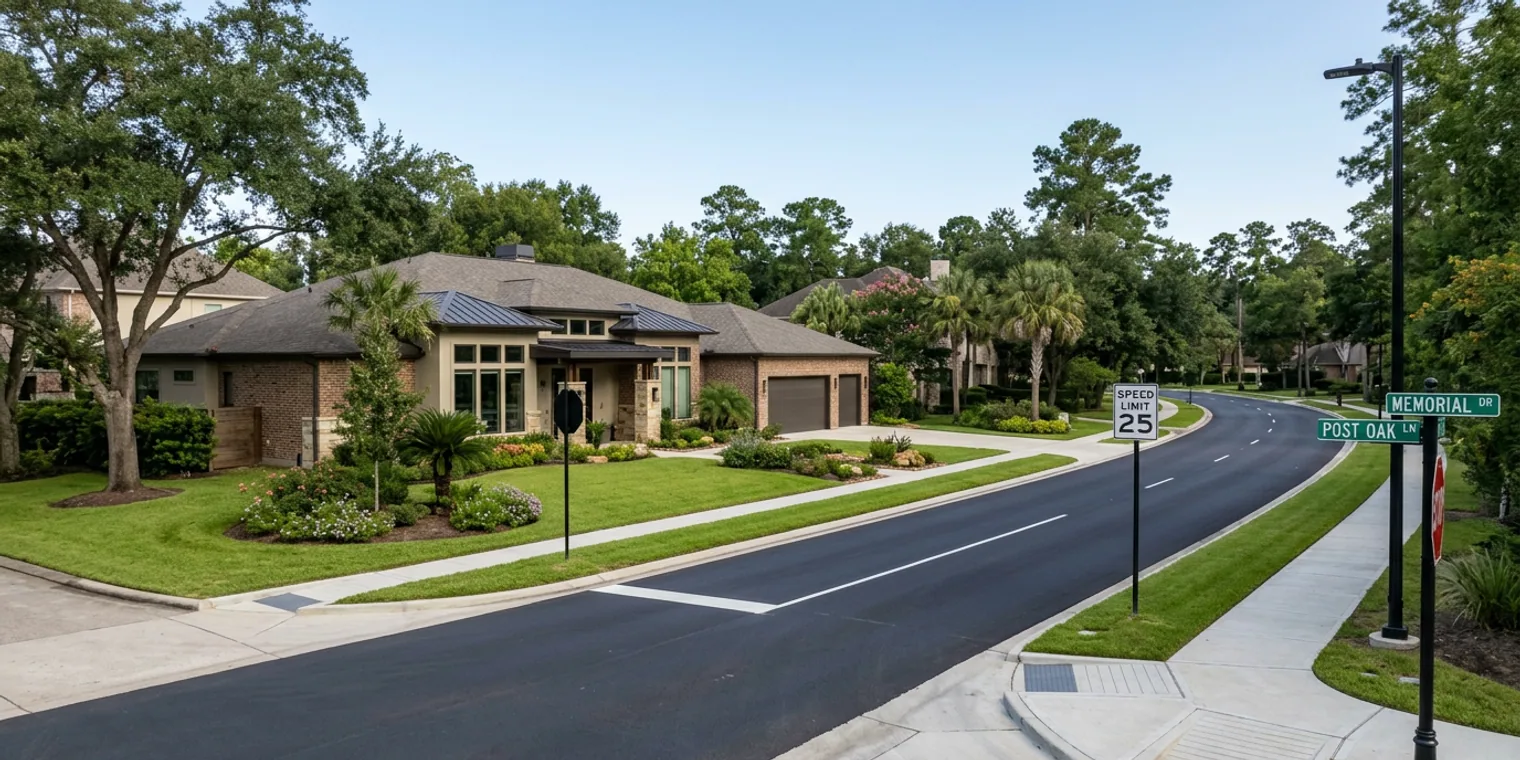
A road project can change access, noise and construction disruption, but it does not guarantee a higher home value. Test the actual trip from the property and verify the project’s limits, stage and funding through the responsible agency.
Separate access from a promise of appreciation
For a buyer, the useful question is whether a route works for the trips made every week. A new connection may improve one journey while bringing more traffic near another property. Price effects require relevant sales evidence; they cannot be inferred from an announcement alone.
Compare the front door to the destination, including subdivision exits, signals, tolls and return travel. Test the trip at the hour you expect to use it. Avoid publishing a fixed commute time as if it applies to every address or day.
Where can you verify road projects?
TxDOT’s Project Tracker provides state-project information. Check the project identifier, limits, development stage and available schedule. For a county or municipal road, confirm information with that road’s owner; absence from TxDOT’s database does not prove no project exists.
Houston TranStar provides current traffic information. It is useful for observing conditions, not predicting a commute years ahead.
A local example of why project limits matter
TxDOT’s SH 36 corridor page describes a corridor with multiple elements, including a Spur 10 extension south of US 59. A corridor-level description is a starting point for research. A buyer near Rosenberg should locate the particular segment relative to the home and verify its present status before relying on a future connection.
This guide does not assert a completion date or a measured price premium for that work. The project reference was checked October 4, 2026; schedules and scope should be rechecked when a property decision is made.
Use a route comparison worksheet
| Check | What to record |
|---|---|
| Regular journey | Origin, destination, weekday and departure window |
| Neighborhood access | Time to the main corridor and alternate exit |
| Costs | Tolls, distance and recurring parking costs |
| Project evidence | Agency, project ID, limits, status and source date |
| Property tradeoffs | Road noise, driveway access, construction and drainage questions |
For a Cypress versus Katy search, compare the relevant US 290 and I-10 routes rather than assuming one broad area is always faster. A work destination west of Houston creates a different comparison from a downtown destination.
What should a seller claim?
Describe verified current access accurately. If mentioning a future project, label its status, cite the agency and avoid guaranteeing timing or appreciation. Ask whether the feature actually distinguishes the home from comparable listings.
Use the Cypress–Katy comparison for corridor context and the flood guide for the drainage questions that a transportation map cannot answer.
Frequently asked questions
Will a new road increase my home’s value?
Not necessarily. Access, noise, construction and buyer demand can have different effects. Use comparable sales instead of a promised premium.
Where should I check a proposed road?
Start with the agency responsible for the road. Use TxDOT Project Tracker for state projects and city or county records for their roads.
Put the guide in local context
Use these community guides to narrow the search, then verify the exact property’s records.
Get guidance for your specific move.
Online research is a useful starting point. The home, neighborhood and timing still need to work together. Text John with what you are considering and get a practical next step.
Text John